A well maintained HOA landscape does more than make a community look clean.
It shapes resident satisfaction, protects property values, reduces complaints, improves safety, and creates the first impression people have when they enter the neighborhood.
For HOA boards and community managers, landscaping is often one of the most visible and most criticized parts of community management. Residents may not notice every behind the scenes decision, but they notice dead plants, dry turf, weeds, overgrown shrubs, fallen palm debris, irrigation leaks, and neglected entrances.
That is why HOA landscape maintenance standards matter.
Clear standards help boards set expectations, evaluate landscaping vendors, plan budgets, and avoid confusion when residents raise concerns. Without clear standards, the board may end up reacting to complaints instead of managing the landscape proactively.
This guide explains the HOA landscape maintenance standards every board should understand, especially for Phoenix communities where heat, irrigation, monsoon storms, and desert landscaping create unique maintenance demands.
Why HOA Landscaping Standards Matter
HOA landscaping is different from maintaining a single commercial building or private yard.
A community landscape has many audiences. Residents see it every day. Visitors judge the neighborhood by it. Prospective buyers notice it before they ever look at a home. Property managers rely on it to support community appearance and board expectations.
When standards are unclear, small problems can become ongoing frustration.
One resident may expect weekly trimming. Another may complain about irrigation runoff. Another may notice weeds near a common wall. Another may worry about tree limbs near sidewalks or homes.
A clear maintenance standard gives everyone a shared understanding of what the landscape should look like and how problems should be handled.
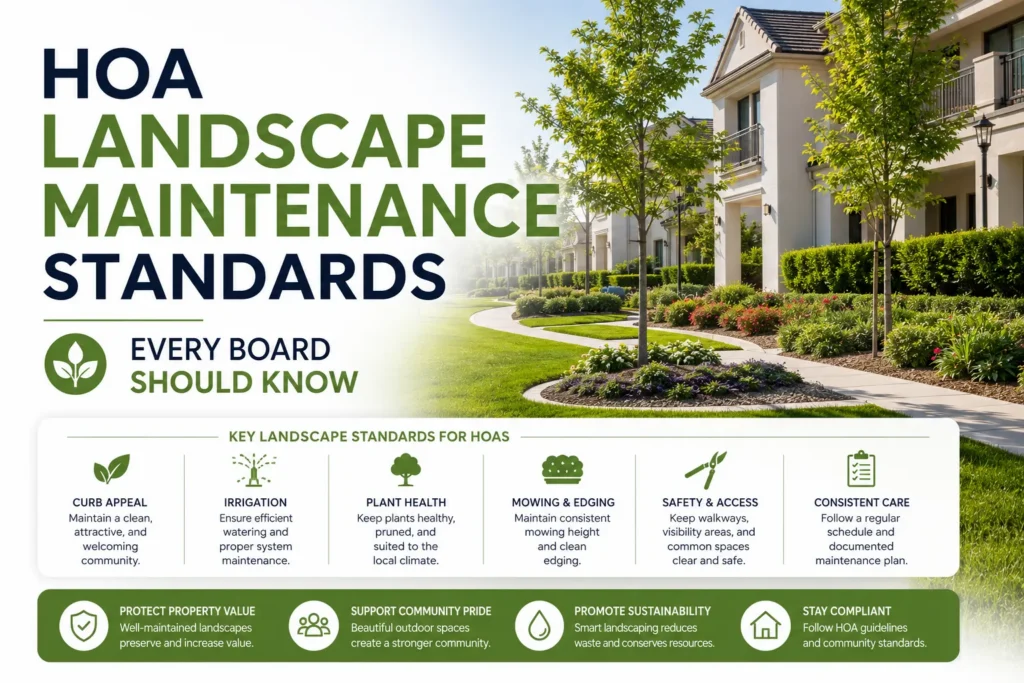
Strong HOA landscape standards usually cover common areas, entrances, turf, plant beds, irrigation, trees, palms, weeds, seasonal cleanups, and communication from the landscaping vendor.
Common Areas Should Look Consistent and Maintained
Common areas are the foundation of HOA landscaping.
These spaces may include greenbelts, walking paths, community parks, retention areas, clubhouse surroundings, pool areas, monument signs, playgrounds, mailbox areas, and shared landscape corridors.
The standard should be simple.
Common areas should look clean, safe, and consistently maintained.
That means turf should not be overgrown or patchy, shrubs should not block walkways, debris should not sit for long periods, weeds should be controlled, and irrigation problems should be reported quickly.
In Phoenix, common areas need especially close attention during summer because plant stress and turf decline can appear quickly when irrigation is not working properly. A small dry zone can become highly visible within days, especially in areas residents use every morning and evening.
Boards should expect their landscaping vendor to understand which common areas are highest priority and which zones need extra attention before board meetings, community events, or seasonal changes.
Entrances and Monument Areas Need a Higher Standard
The entrance of an HOA community carries more visual weight than almost any other landscape area.
It is the first thing residents see when they come home. It is also the first thing guests, vendors, real estate agents, and potential buyers notice.
For that reason, HOA entrances and monument areas should usually have a higher maintenance standard than less visible areas of the community.
A strong entrance standard includes clean beds, healthy plants, controlled weeds, clear signage, neat edging, stable decorative rock, working irrigation, trimmed shrubs, and a clean overall appearance.
If seasonal color is part of the community design, it should be maintained carefully. Dead flowers, bare spots, or poorly watered beds can make the entire community look neglected even if the rest of the property is in decent shape.
In Phoenix, monument areas often have irrigation lines hidden under rock or behind plant material. These areas should be checked regularly because a leak or dry zone near the entrance becomes noticeable fast.
Irrigation Checks Are Essential in Phoenix HOA Communities
Irrigation is one of the most important HOA landscape maintenance standards in Phoenix.
Without reliable irrigation, even a well designed landscape can decline quickly.
HOA boards should not treat irrigation as an occasional repair issue. It should be part of routine landscape oversight.
A strong irrigation standard includes regular checks for broken heads, leaking valves, dry zones, standing water, controller issues, damaged drip lines, overspray, and uneven coverage.
This matters because Phoenix landscapes depend heavily on irrigation during hot months. A dry area in a common space can lead to dead plants, turf loss, resident complaints, and replacement costs. A hidden leak can waste water and increase community expenses before anyone realizes what happened.
The landscaping vendor should be expected to identify visible irrigation concerns during routine visits and communicate them clearly to the community manager or board.
Not every irrigation repair has to be included in the monthly contract, but the process should be clear. Boards should know how issues are reported, how repairs are approved, and how urgent problems are handled.
Trees and Palms Should Be Managed With Safety in Mind
Tree and palm care is not only about appearance.
It is also about safety and liability.
HOA communities often have trees near sidewalks, homes, parking areas, walls, playgrounds, pool areas, and streets. Overgrown limbs, dead branches, low hanging growth, palm debris, and storm damaged trees can create risks for residents and visitors.
A board friendly tree standard should include regular observation, scheduled trimming when needed, removal of hazardous limbs, clearance around walkways and lighting, and seasonal preparation before monsoon storms.
Palm trees require special attention in Phoenix. Heavy frond buildup can create falling debris, pest concerns, and fire risk. During wind and storm events, neglected palms can quickly become a visible problem across the community.
Boards should ask whether tree and palm care is included in the regular maintenance agreement or handled as a separate service. Many HOA landscaping contracts include basic observation but not major trimming or palm work.
That distinction should be clear before problems appear.
Weed Control Should Be Proactive, Not Reactive
Weeds are one of the most common HOA landscaping complaints.
They show up along walls, sidewalks, curb lines, landscape beds, turf edges, decomposed granite areas, and rock landscapes. Once weeds become visible across multiple areas, the community can quickly look poorly maintained.
A strong HOA weed control standard should focus on prevention and consistency.
The goal is not only removing weeds after residents complain. The goal is keeping weed pressure under control through regular maintenance, inspection, and treatment when appropriate.
Phoenix communities with decorative rock and desert landscaping often need ongoing weed attention because wind, irrigation, and seasonal weather can spread growth across open areas.
Boards should expect vendors to address weeds as part of routine maintenance and report larger recurring weed issues that may require a more targeted plan.
Plant Health Should Be Monitored Throughout the Year
Healthy plants are central to a well maintained HOA landscape.
Boards should expect the landscaping vendor to monitor plant condition, not just trim around plants.
Plant health standards should include watching for stress, dieback, discoloration, overgrowth, pest signs, irrigation imbalance, overcrowding, and plants that no longer fit the landscape design.
In Phoenix, plant health can change quickly during seasonal transitions. Some plants may struggle during extreme summer heat. Others may decline because of poor irrigation coverage, soil issues, age, or improper placement.
A vendor should be able to identify whether a plant problem appears isolated or part of a larger maintenance issue.
For example, one dead shrub may simply need replacement. Several declining shrubs in the same area may point to a drip irrigation problem.
This kind of observation helps boards make better decisions and avoid repeated plant replacement without fixing the underlying cause.
Turf Areas Need Clear Appearance Expectations
Not every HOA community has large turf areas, but where turf exists, residents usually notice its condition.
Turf standards should address mowing frequency, edging, color consistency, dry spots, weeds, bare patches, and irrigation coverage.
In Phoenix, turf can become expensive when it is not managed properly. Poor irrigation, heat stress, overwatering, soil compaction, and foot traffic can all affect appearance.
Boards should decide what level of turf appearance is realistic for the community’s budget and landscape design.
Some communities expect highly consistent green turf in visible areas. Others may maintain turf only in parks, dog areas, or central common spaces. Either approach can work if the standard is clear and the maintenance plan supports it.
Seasonal Cleanups Should Be Planned Before Problems Build Up
Seasonal cleanup is a major part of HOA landscape maintenance.
Boards should not wait until the community looks messy before planning cleanup work.
In Phoenix, seasonal priorities often include pre summer irrigation review, monsoon preparation, post storm debris cleanup, fall cleanup, plant replacement planning, and winter improvement projects.
Before monsoon season, tree limbs, palms, drainage paths, and loose debris should be reviewed. After storms, fallen branches, palm fronds, washout, and blocked drains may need attention quickly.
Before summer heat intensifies, irrigation systems should be checked carefully so dry zones and leaks can be addressed early.
Seasonal planning helps boards avoid emergency decisions and reduces the number of resident complaints caused by predictable conditions.
Communication Standards Matter as Much as Field Work
Many HOA landscaping frustrations are communication problems, not just maintenance problems.
A board may not know whether the crew visited. A property manager may not receive updates about irrigation issues. Residents may complain about the same area repeatedly because no one has explained the repair timeline.
A strong HOA landscape maintenance standard should include clear communication expectations.
The landscaping company should have a main point of contact, a process for reporting issues, a way to document concerns, and a system for communicating recommendations.
Boards should expect updates about recurring problems, irrigation repairs, tree risks, plant replacement needs, and seasonal recommendations.
Good communication helps community managers answer resident questions with confidence. It also helps the board make better budget decisions.
Boards Should Know What Is Included and What Is Not
One of the biggest sources of confusion in HOA landscaping is contract scope.
Many boards assume everything landscape related is included in the monthly maintenance fee. In reality, most contracts separate routine maintenance from larger work.
Routine maintenance may include mowing, edging, blowing, shrub trimming, weed control, debris cleanup, bed care, and basic irrigation observation.
Separate services may include major irrigation repair, tree trimming, palm trimming, plant replacement, seasonal color, landscape renovations, decorative rock installation, drainage correction, and storm cleanup.
This does not mean the vendor is doing anything wrong.
It means the contract needs to be clear.
Boards should review what is included, what requires approval, how additional work is priced, and how urgent repairs are handled.
Clear scope prevents frustration later.
How Clear Standards Help Reduce Resident Complaints
Resident complaints often happen when expectations are unclear or problems are allowed to sit too long.
Clear landscaping standards help boards reduce complaints by creating consistency.
When the community knows landscaping is inspected regularly, irrigation issues are reported, trees are monitored, weeds are managed, and seasonal cleanup is planned, residents are less likely to feel ignored.
Standards also help property managers respond better.
Instead of saying, “We will check on it,” they can explain that the issue has been identified, sent to the vendor, scheduled for correction, or included in a larger seasonal plan.
That level of clarity builds trust.
Residents may not agree with every landscape decision, but they are more likely to feel confident when the process is organized.
What HOA Boards Should Expect From a Landscaping Vendor
A reliable HOA landscaping vendor should do more than complete routine tasks.
The vendor should understand how the community operates.
That includes board expectations, resident visibility, common area priorities, irrigation demands, safety concerns, and communication needs.
A strong HOA landscaping partner should help the board stay ahead of problems by reporting concerns early, recommending seasonal improvements, explaining repair needs, and maintaining the community with consistency.
Boards should look for a company that understands HOA landscaping maintenance and upgrades, not just basic landscape cleanup.
The right vendor makes community management easier.
The wrong vendor creates more emails, more complaints, more inspections, and more board frustration.
Final Thoughts
HOA landscape maintenance standards give boards a practical way to protect community appearance, reduce resident complaints, and manage landscaping decisions with more confidence.
A well maintained HOA landscape should include clean common areas, strong entrance presentation, reliable irrigation oversight, healthy plants, controlled weeds, safe trees and palms, planned seasonal cleanups, and clear vendor communication.
In Phoenix, these standards matter even more because heat, irrigation dependence, and monsoon storms can quickly expose weak maintenance practices.
When the board, community manager, and landscaping company all understand the same standards, the community is easier to maintain, easier to explain, and easier for residents to trust.
Good HOA landscaping is not just about what gets trimmed this week.
It is about protecting the long term appearance, safety, and value of the entire community.