
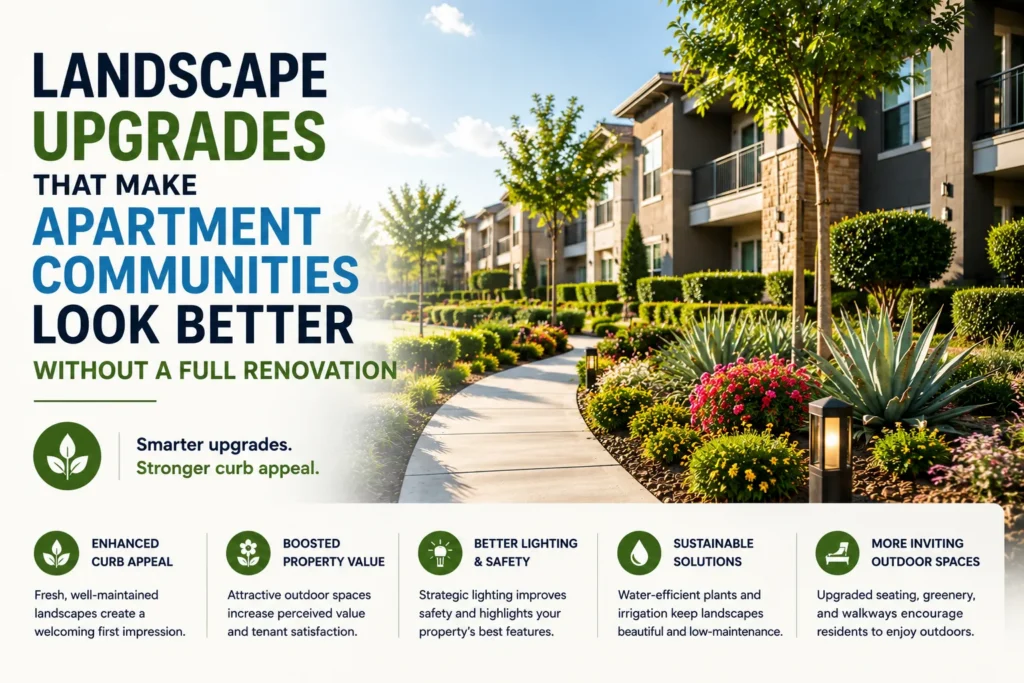
Improving the appearance of an apartment community does not always require a complete landscape redesign.
In many cases, the biggest visual improvements come from correcting small but highly visible problems. Faded decorative rock, dead plants, messy bed edges, weak entrance landscaping, neglected pool areas, and irrigation issues can make an otherwise well-managed property look older than it is.
For apartment property managers, this creates an opportunity.
A focused landscape improvement plan can refresh the property, strengthen leasing appeal, and improve resident satisfaction without the cost and disruption of a full renovation.
The key is knowing which upgrades will create the greatest visual impact.
This guide explains the apartment landscaping improvements that can make a community look cleaner, newer, and better maintained without rebuilding the entire landscape.
Start With the Areas Prospective Residents See First
Not every part of an apartment property has the same visual value.
The entrance, monument sign, leasing office, model unit path, parking approach, pool area, and main common spaces influence first impressions more than low-visibility landscape zones.
Property managers should begin by walking the property as if they were a prospective resident arriving for the first time.
Look for faded rock, dead shrubs, uneven beds, exposed irrigation tubing, weeds, poor edging, dry turf, damaged plants, and areas where the landscaping no longer supports the property’s appearance.
A focused upgrade plan should improve these high-visibility areas first.
This approach gives the property a stronger return from a smaller landscape investment.
Refresh Decorative Rock Instead of Rebuilding Entire Beds
Decorative rock is one of the most common elements in Phoenix apartment landscaping.
Over time, rock can fade, thin out, shift into walkways, collect debris, or expose bare soil underneath. Even when the plants are healthy, worn rock can make the landscape look unfinished.
A decorative rock refresh can improve the appearance of entrances, leasing offices, pool areas, parking islands, and common spaces without changing the entire landscape design.
The work may include adding matching rock, redistributing existing material, correcting thin areas, removing debris, and restoring clean bed lines.
The result is simple but noticeable.
Fresh, even rock makes landscape beds look cleaner and better maintained. It also creates a stronger visual background for existing plants.
Before adding new material, irrigation lines and drainage problems should be checked. New rock should not be used to hide leaks, erosion, or damaged drip systems.
Replace Dead and Poorly Performing Plants
A few dead or declining plants can make an entire apartment community look neglected.
This is especially true near entrances, leasing offices, signs, sidewalks, and pool areas.
Targeted plant replacement is often more practical than redesigning a complete landscape bed.
Property managers should identify plants that are dead, badly damaged, overcrowded, poorly placed, or repeatedly failing in the same location.
Replacement plants should be selected for the site’s actual conditions.
A plant near a west-facing wall may need to tolerate reflected heat. A shrub near a walkway may need to be kept under control. Plants in pool areas may need to handle heat, foot traffic, and maintenance limitations.
Replacing plants without addressing the reasons they failed can lead to recurring costs.
Before installation, check irrigation coverage, soil condition, sunlight, drainage, and available growing space.
Improve the Leasing Office Landscape
The leasing office is one of the most important landscape areas on an apartment property.
It influences how prospective residents perceive the entire community.
If the leasing office entrance has dead plants, faded rock, weeds, empty beds, exposed irrigation lines, or poor edging, visitors may assume the rest of the property is maintained the same way.
A leasing office landscape upgrade does not need to be large.
Small improvements may include replacing weak plants, refreshing decorative rock, cleaning up bed edges, adding seasonal color, improving the path to the entrance, correcting irrigation issues, and trimming plants that block windows or signs.
The goal is to make the area feel intentional.
A clean, well-maintained leasing office landscape supports the leasing team’s work before a prospect ever enters the building.
Strengthen the Main Entrance
The main entrance creates the first impression for residents, visitors, delivery drivers, and prospective tenants.
It should feel clean, easy to read, and professionally maintained.
Common entrance problems include overgrown shrubs, faded plant material, damaged monument beds, weak lighting visibility, missing plants, weeds, poor edging, and decorative rock that has moved into curbs or drive lanes.
Entrance improvements may include selective plant replacement, better trimming, rock refreshes, clearer bed lines, irrigation repair, and limited seasonal color.
The landscape should support the monument sign rather than cover it.
Plants should frame the entrance, not block visibility or create maintenance problems.
Refresh Pool Area Landscaping
Pool areas receive heavy visual attention from both current and prospective residents.
Even when the pool itself is clean, surrounding landscaping can make the area feel dated if plants are overgrown, beds are messy, rock is faded, or irrigation creates wet walkways.
Pool area landscaping should feel clean, open, and comfortable.
Useful upgrades may include replacing struggling plants, improving bed edges, refreshing rock, removing plants that create excessive debris, correcting overspray, and opening views around seating areas.
Plant selection matters around pools.
Some trees and shrubs create constant leaf, flower, or seed debris. Others grow too aggressively or block sight lines. The best pool area landscaping improves appearance without increasing cleanup demands.
Irrigation should also be checked carefully so water does not spray onto decks, furniture, walkways, or pool equipment.
Clean Up Existing Landscape Beds
Many apartment communities do not need new beds.
They need cleaner existing beds.
Over time, beds can lose their shape. Plants grow together, weeds appear, rock shifts, dead material accumulates, and edges become unclear.
A detailed bed cleanup can make a major difference.
This may include removing dead growth, thinning crowded plants, resetting decorative rock, removing weeds, exposing healthy plant shapes, and restoring the original bed line.
The objective is not to cut everything back heavily.
It is to make the bed look organized and maintained.
Clean beds also make it easier to see irrigation leaks, missing emitters, and plant health problems.
Restore Clean Edging
Edging is one of the least expensive ways to improve apartment landscaping.
Clean edges around turf, sidewalks, curbs, decorative rock, and landscape beds create visual separation and make the property look more precise.
Poor edging causes turf to grow into walkways, rock to spill into drive lanes, and beds to lose their shape.
On larger apartment properties, these small issues repeat across the site and make the entire landscape feel inconsistent.
Restoring clean edges can improve appearance without adding new plants or materials.
It is especially valuable near the leasing office, entrances, sidewalks, pool areas, and high-traffic common spaces.
Use Seasonal Color in Selected Areas
Seasonal color can improve curb appeal when it is used carefully.
It does not need to be installed across the entire property.
For most apartment communities, seasonal color works best near the leasing office, monument sign, main entrance, clubhouse, or another important focal point.
A small, healthy flower display often creates more impact than several large beds that are difficult to maintain.
Seasonal color requires reliable irrigation, regular care, and timely replacement.
Property managers should avoid adding flowers to areas where irrigation coverage is poor or reflected heat is too intense.
The best seasonal color plan is focused, visible, and manageable.
Repair Irrigation Before Adding New Plants
Irrigation repair is one of the most important apartment landscape improvements, even though it is not always the most visible.
Dry spots, leaks, clogged emitters, broken sprinkler heads, poor pressure, and controller issues can damage both existing landscaping and new upgrades.
Installing replacement plants without first fixing the irrigation often leads to repeated plant loss.
Property managers should review irrigation performance before approving rock refreshes, new shrubs, seasonal color, or turf improvements.
A working irrigation system protects the value of every other landscape investment.
It also helps reduce water waste, standing water, resident complaints, and emergency repair costs.
Improve Parking Islands and Walkways
Parking islands and walkway beds are highly visible because residents and visitors pass them every day.
These areas often decline because of vehicle heat, reflected sunlight, foot traffic, litter, damaged irrigation, and limited growing space.
Useful improvements may include replacing missing plants, resetting rock, removing weeds, correcting irrigation, improving tree clearance, and repairing bed edges.
Plants in parking islands should be selected carefully.
They need to tolerate heat, limited soil space, reflected pavement temperatures, and occasional damage from vehicles or pedestrians.
Walkway landscaping should remain clear and safe.
Shrubs should not narrow paths, block lighting, hide signs, or create places where water collects.
Remove Plants That No Longer Fit the Property
Not every landscape improvement requires adding something.
Sometimes the best upgrade is removal.
Overgrown shrubs, badly placed plants, declining trees, crowded beds, and plants that repeatedly block sidewalks or signs can make a property look messy.
Removing selected plant material can open views, improve safety, reduce maintenance, and make nearby healthy plants look better.
This should be done carefully.
The goal is not to leave large empty spaces. It is to simplify areas that have become overcrowded or difficult to maintain.
After removal, the area may only need rock restoration, a smaller replacement plant, or improved irrigation coverage.
Correct Small Drainage and Erosion Problems
Drainage problems can make apartment landscapes look neglected and can damage recent upgrades.
Water runoff may move decorative rock, wash decomposed granite into walkways, expose drip lines, create low spots, or leave stains along curbs.
Property managers should look for repeated erosion, standing water, soil washout, and material collecting near drains.
Small corrections may include redirecting irrigation, resetting material, repairing leaks, improving bed contours, or stabilizing problem areas.
Ignoring drainage issues can turn a simple landscape refresh into repeated repair work.
Upgrade Landscape Lighting Visibility
Landscape lighting is often separate from landscape maintenance, but plant growth can affect how well it works.
Overgrown shrubs may block pathway, monument, building, and security lighting.
A targeted landscape cleanup can improve lighting without replacing fixtures.
Plants should be trimmed or selectively replaced so lighting reaches signs, paths, entrances, and common spaces properly.
This improves both appearance and safety.
Create a Phased Improvement Plan
Apartment property managers do not need to complete every landscape upgrade at once.
A phased plan can spread costs while improving the property in a logical order.
The first phase should address urgent irrigation problems, safety concerns, dead plants, and high-visibility areas.
The next phase may focus on entrances, the leasing office, pool landscaping, and common spaces.
Later phases can address parking islands, lower visibility beds, decorative rock expansion, and larger plant replacement programs.
A phased approach allows ownership and management teams to see progress without committing to a full renovation budget.
It also makes it easier to measure which improvements create the most value.
How to Prioritize Apartment Landscape Improvements
When budgets are limited, prioritize improvements based on visibility, urgency, and long-term value.
Begin with anything that affects safety or irrigation. Then address dead plants, entrance appearance, leasing areas, pool spaces, and other locations that influence leasing and resident experience.
Next, focus on improvements that reduce ongoing maintenance problems.
For example, replacing a repeatedly failing plant with a better-suited option may save more over time than continuing to replace the same species.
The strongest upgrades solve both an appearance problem and a maintenance problem.
What Property Managers Should Expect From a Landscape Improvement Proposal
A good landscape improvement proposal should be clear about what will change and why.
It should identify the area, describe the problem, explain the recommended work, list materials or plants, address irrigation needs, and clarify what ongoing maintenance will be required.
Property managers should be cautious of proposals that recommend large amounts of new plant material without discussing water coverage, heat exposure, long-term growth, or maintenance demands.
The goal is not simply to make the property look better on installation day.
The goal is to create improvements that remain attractive and manageable after installation.
Final Thoughts
Apartment landscaping can be improved significantly without a full renovation.
Decorative rock refreshes, targeted plant replacement, leasing office upgrades, stronger entrances, cleaner pool areas, restored bed edges, seasonal color, and irrigation repairs can create a noticeable difference at a manageable cost.
The most effective landscape upgrades focus on the areas residents and prospective tenants see most.
They also correct the underlying issues that cause landscapes to decline, especially irrigation problems, poor plant placement, erosion, and repeated maintenance failures.
For apartment property managers, the best improvement plan is not always the largest one.
It is the plan that makes the property feel cleaner, more welcoming, and better managed while protecting the long-term landscape budget.
Frequently Asked Questions
Apartment landscaping can be improved through decorative rock refreshes, targeted plant replacement, bed cleanup, edging, irrigation repair, seasonal color, and upgrades around entrances and leasing areas.
Main entrances, leasing offices, pool areas, monument signs, and high-traffic common spaces usually provide the greatest visual return.
Yes. Irrigation problems should be corrected before planting so new landscaping receives proper water and does not fail prematurely.
Not always. Existing rock can often be redistributed and supplemented in thin or faded areas rather than completely replaced.
Yes. A phased plan allows property managers to address urgent repairs and high-visibility areas first while spreading larger improvements across the budget.