
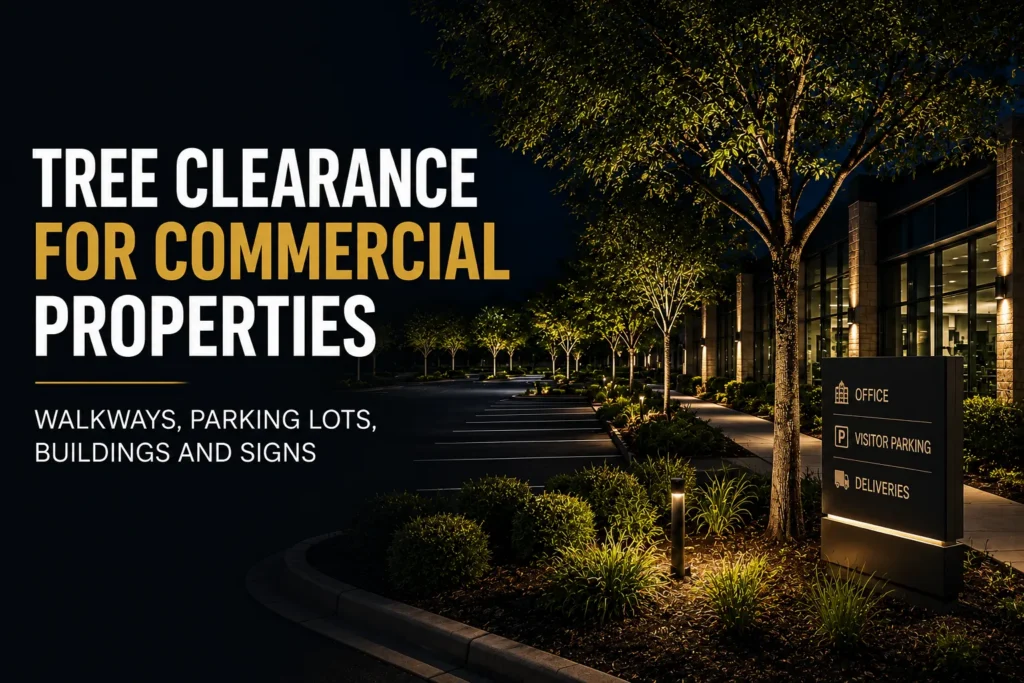
Trees add shade, structure, and visual value to commercial properties, but they also need enough clearance around the places people, vehicles, and buildings use every day. Because of that, tree clearance matters wherever these uses overlap.
When branches grow too low over sidewalks, extend into parking areas, cover signs, touch buildings, or obstruct visibility, the issue becomes more than landscaping. It becomes a safety, access, and property management concern.
It becomes a safety, access, and property management concern.
For property managers, HOA communities, apartment properties, retail centers, office complexes, and other managed sites, proactive tree trimming helps keep common areas usable while protecting the appearance of the landscape.
This guide explains where tree clearance matters most on commercial properties, what warning signs to watch for, and why early trimming is usually easier and less expensive than waiting until branches begin creating problems. The goal is to help property managers act early and avoid larger issues.
What Is Tree Clearance on a Commercial Property?
Tree clearance is the space maintained between tree branches and important property features.
That may include sidewalks, drive lanes, parking spaces, buildings, monument signs, lighting, entrances, roofs, walls, and pedestrian areas.
The goal is not to remove unnecessary amounts of canopy.
The goal is to keep trees healthy while providing enough clearance for people, vehicles, signs, buildings, and everyday property operations. In practice, that means maintaining usable space without forcing the landscape to work against the property.
Good tree clearance should feel natural.
A properly maintained tree can still provide shade and visual appeal without creating low branches, blocked views, or constant conflicts with the surrounding property.
Low Limbs Over Walkways Can Become a Safety Problem
Sidewalks and pedestrian paths are some of the most important areas to monitor.
Tree limbs can gradually grow lower over time, especially when they become heavier or extend farther from the trunk.
Residents, tenants, employees, customers, maintenance workers, and visitors should be able to use walkways without ducking under branches or stepping around vegetation.
Low branches may also interfere with lighting, create blind spots, or make pathways feel narrower.
Property managers should pay particular attention to trees near entrances, mail areas, leasing offices, clubhouses, medical buildings, retail storefronts, and other locations with frequent pedestrian traffic.
Trimming these areas before branches become a problem helps maintain clear access and reduce unnecessary safety concerns. The takeaway is to keep walkways usable with regular attention.
Parking Lots Need Enough Clearance for Vehicles
Trees around parking lots need a different kind of clearance.
Branches that extend too low over parking spaces can interfere with trucks, delivery vehicles, maintenance equipment, and taller passenger vehicles.
They may scrape vehicles, break during contact, or force drivers to avoid otherwise usable parking spaces.
Parking lot trees should also be checked along drive lanes and turning areas.
A branch that does not affect a standard car may still interfere with delivery vans, service trucks, moving vehicles, or emergency access.
Property managers should look at tree clearance from the perspective of how the parking area is actually used.
If branches repeatedly need to be moved, avoided, or driven around, the tree likely needs attention. The practical takeaway is to address clearance before it interferes with daily use.
Trees Should Not Block Property Signs
Signs are essential to commercial property access. They help visitors find entrances, identify buildings, locate leasing offices, follow parking rules, and recognize businesses or communities.
They help visitors find entrances, identify buildings, locate leasing offices, follow parking rules, and recognize businesses or communities.
As trees mature, branches can gradually cover signs that were originally easy to see.
This is especially common around monument signs, directional signs, tenant panels, community entrances, and building identification.
The problem often develops slowly, which makes it easy to overlook.
Property managers who see the property every day may become used to the reduced visibility while first-time visitors struggle to read the sign.
Trees should frame signage without hiding it. Selective trimming can often restore visibility without removing the tree or dramatically changing its shape.
Selective trimming can often restore visibility without removing the tree or dramatically changing its shape. The takeaway is to balance visibility with tree form.
Branches Near Buildings Need Regular Attention
Trees planted near buildings can eventually grow into roofs, walls, windows, gutters, lighting, and other structures, so branches that repeatedly touch the building may scrape surfaces during wind, collect debris on roofs, interfere with maintenance access, or place unnecessary pressure on the surrounding structure.
Branches that repeatedly touch the building may scrape surfaces during wind, collect debris on roofs, interfere with maintenance access, or place unnecessary pressure on the surrounding structure.
This does not mean every branch near a building needs to be removed.
The goal is reasonable separation.
Property managers should monitor trees near rooflines, balconies, windows, awnings, building corners, and exterior equipment.
As trees mature, the amount of clearance needed may change.
A tree that fit comfortably into the landscape ten years ago may now require a more deliberate trimming plan. The takeaway is to reassess clearance as trees mature.
Entrance Visibility Should Be Protected
Commercial entrances need clear visibility for both safety and appearance, and overgrown trees can block drivers’ views of approaching vehicles, pedestrians, signs, and entry lanes.
Overgrown trees can block drivers’ views of approaching vehicles, pedestrians, signs, and entry lanes.
This is especially important near parking lot exits, community entrances, intersections, and internal driveways.
Property managers should review sight lines from the driver’s perspective rather than only looking at the landscape from the sidewalk.
If a branch or canopy makes it difficult to see traffic, signs, or people approaching an entrance, trimming may be necessary.
Good clearance makes the property easier to navigate and helps the landscape support the site rather than interfere with it. The takeaway is to protect sight lines before they become a problem.
Trees Can Interfere With Lighting and Security Visibility
Trees and lighting often compete for the same space as landscapes mature, so that branches can cover parking lot lights, walkway fixtures, monument lighting, and building lights.
Branches can cover parking lot lights, walkway fixtures, monument lighting, and building lights.
Dense growth may also reduce visibility around entrances, parking areas, paths, and common spaces.
Property managers should inspect these areas after dark as well as during the day.
A tree that looks properly maintained in daylight may be blocking a large portion of a light fixture at night.
Selective trimming can improve lighting performance without requiring new fixtures. The takeaway is to clear branches before they reduce visibility and coverage.
It can also make walkways, parking areas, and entrances feel more open.
Palm Debris Needs Its Own Maintenance Plan
Palm trees create a different type of clearance and cleanup concern, and dead fronds, seed pods, and loose palm material can build up overhead and eventually fall into sidewalks, parking areas, landscaped beds, roofs, and common spaces.
Dead fronds, seed pods, and loose palm material can build up overhead and eventually fall into sidewalks, parking areas, landscaped beds, roofs, and common spaces.
This becomes especially important on Phoenix commercial properties where palms are frequently used along entrances, roads, apartment communities, retail centers, and parking areas.
Palm maintenance should be planned before debris becomes excessive.
Property managers should know whether palm trimming is part of the regular landscape agreement or handled as a separate tree service.
Waiting until large amounts of dead material are hanging overhead can create a more visible problem and make cleanup more difficult. The takeaway is to plan palm maintenance before debris builds up.
Tree Clearance Around Monument Signs Matters Too
Monument signs often sit inside landscaped areas surrounded by trees and shrubs. Hence, as trees grow, branches may begin covering the community or business name, casting heavy shadows across the sign, or interfering with lighting.
As trees grow, branches may begin covering the community or business name, casting heavy shadows across the sign, or interfering with lighting.
This can make the entrance look less maintained even when the sign itself is in good condition.
Tree trimming around monument signs should preserve the tree’s natural appearance while keeping the sign readable from the road. The takeaway is to maintain visibility without overpowering the sign.
Boards and property managers should check visibility from both directions of travel.
A sign may appear clear when viewed straight on but disappear behind branches as drivers approach from one side.
Delivery and Service Areas Need Practical Clearance
Commercial properties receive regular deliveries, service vehicles, waste collection, moving trucks, and maintenance crews, so trees near these areas need enough vertical and side clearance to allow vehicles and workers to operate normally.
Trees near these areas need enough vertical and side clearance to allow vehicles and workers to operate normally.
Branches near loading areas or service lanes may be repeatedly damaged if they are too low.
Repeated vehicle contact can also damage the tree itself.
Property managers should review where larger vehicles actually travel rather than focusing only on customer or resident parking areas.
A practical tree maintenance plan considers how the property functions every day. The takeaway is to match trimming priorities to real site use.
Tree Growth Can Slowly Reduce Access
One reason tree clearance problems are easy to miss is that they develop gradually, and a branch may grow only a small amount each season.
A branch may grow only a small amount each season.
Over several years, that growth can reduce sidewalk width, parking clearance, sign visibility, and access around buildings.
Because the change happens slowly, the problem may not become obvious until residents, tenants, or visitors begin complaining.
Routine inspections help property managers catch these changes earlier.
The best time to correct a clearance issue is usually before the branch becomes large enough to require more significant pruning. The takeaway is to act early and avoid bigger work later.
Proactive Trimming Helps Reduce Liability Concerns
Tree maintenance cannot eliminate every risk, but proactive trimming helps property managers address obvious hazards before they become more serious. The takeaway is to stay ahead of visible problems.
Low branches over sidewalks, dead limbs above parking spaces, hanging palm debris, and branches blocking visibility are examples of conditions that should not be ignored.
Properties with high pedestrian traffic require particular attention.
Apartment communities, HOA common areas, retail centers, medical properties, and office campuses may have people moving through landscaped areas throughout the day.
Regular observation and timely trimming demonstrate that visible tree concerns are being managed rather than left to develop.
Proactive Trimming Also Protects Tree Health
Tree clearance should not be treated as aggressive cutting.
Poor trimming can create its own problems.
Removing too much canopy, cutting large limbs unnecessarily, or repeatedly trimming a tree into an unnatural shape can weaken the tree and create more maintenance later.
The best approach is selective trimming.
Branches should be removed or reduced when they create access, safety, structural, or visibility problems while preserving healthy growth wherever possible.
This creates a better balance between property needs and long-term tree health.
Tree Clearance Improves Property Appearance
Clearance is practical, but it also affects curb appeal.
A property where trees block signs, hang over sidewalks, cover lighting, or grow unevenly around buildings can look poorly maintained.
Properly trimmed trees make entrances easier to see, walkways cleaner, parking areas more open, and buildings more visible.
This is especially important on managed properties where landscaping contributes to how residents, tenants, customers, and visitors judge overall property care.
Good tree maintenance should make the landscape look intentional without making the trees appear overtrimmed.
Phoenix Monsoon Conditions Make Tree Maintenance More Important
Phoenix commercial properties also need to consider summer storm conditions.
Strong winds and monsoon activity can expose weak, dead, damaged, or poorly positioned branches.
A limb that already hangs over a parking area or walkway becomes a greater concern when severe weather arrives.
Property managers should review trees before monsoon season, particularly around entrances, buildings, sidewalks, parking areas, signs, and common spaces.
The goal is not to remove every branch that could move in the wind.
It is to identify obvious dead growth, weak limbs, excessive overhang, and clearance problems before storms increase the risk.
Signs a Commercial Property May Need Tree Trimming
Property managers should consider tree trimming when branches begin affecting how people use or see the property.
Common warning signs include branches hanging into sidewalks, limbs touching vehicles, signs becoming difficult to read, growth near roofs or buildings, palm debris accumulating overhead, lights becoming blocked, and visibility decreasing near driveways.
Repeated complaints are another sign that the property may have waited too long.
A good tree maintenance program should catch most of these issues before they become resident, tenant, or customer concerns.
How Often Should Tree Clearance Be Reviewed?
There is no single trimming schedule that works for every tree or property.
Growth rate, species, tree age, location, irrigation, weather, and available space all affect how quickly clearance changes.
The better approach is regular inspection.
Trees near sidewalks, buildings, parking areas, signs, entrances, and high-traffic common spaces should receive more attention than trees located in open landscape areas.
Property managers should also review trees before major seasonal weather periods and after strong storms.
The objective is to trim when there is a reason, not simply because a calendar date has arrived.
Avoid Waiting Until the Tree Becomes an Emergency
Delayed tree trimming often makes the eventual work more difficult.
A small branch blocking a sign may be simple to address early.
After several years of growth, restoring visibility may require more extensive pruning.
The same applies to branches near buildings, parking areas, and sidewalks.
Proactive maintenance allows the property to make smaller, more controlled corrections over time.
Emergency tree work usually happens when problems have already become urgent.
A planned approach is easier to budget and less disruptive to the property.
What Property Managers Should Expect From a Tree Trimming Company
A commercial tree trimming company should look at more than the tree itself.
The surrounding property matters.
The contractor should understand where people walk, where vehicles travel, which signs need visibility, how buildings are positioned, where lighting is located, and which areas receive the most traffic.
Recommendations should be based on actual clearance needs rather than unnecessary trimming.
Property managers should also receive clear communication about hazardous limbs, palm maintenance, storm concerns, and work that may need to be planned separately.
The goal should be safer access, healthier trees, and a cleaner commercial property.
Final Thoughts
Tree clearance is an important part of maintaining a safe, accessible, and professional commercial property.
Low limbs over sidewalks, branches extending into parking areas, trees blocking signs, growth near buildings, palm debris, and reduced visibility can all create problems when they are ignored.
Proactive tree trimming helps property managers address these issues before they become larger safety concerns, resident complaints, vehicle conflicts, or emergency maintenance problems.
The best tree clearance does not make a property feel overtrimmed.
It makes the landscape work better.
Walkways stay open. Parking areas remain usable. Signs stay visible. Buildings have appropriate separation. Lighting works as intended. Trees continue adding shade and character without interfering with how the property operates.
That is the standard commercial tree maintenance should aim for.
Frequently Asked Questions
Commercial tree clearance means maintaining enough space between tree branches and sidewalks, parking lots, buildings, signs, lighting, and other property features.
Low limbs can restrict pedestrian access, reduce visibility, interfere with lighting, and create avoidable safety concerns.
Low or overgrown branches can interfere with vehicles, block lighting, reduce visibility, and limit usable parking spaces.
Trees should generally have reasonable clearance from roofs, walls, windows, lighting, and other structures while maintaining healthy canopy growth.
Proactive trimming can identify dead limbs, weak branches, excessive overhang, and other obvious concerns before strong summer winds and storms arrive.