
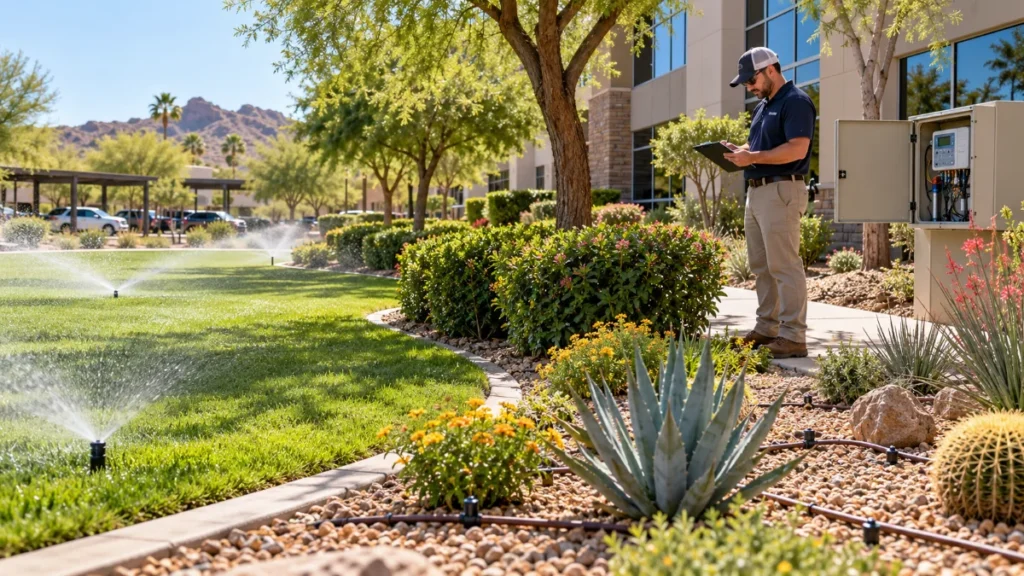
A commercial irrigation system can be fully operational and still water the landscape poorly.
One of the most common reasons is zoning.
Turf, trees, shrubs, seasonal plants, and drip-irrigated beds use water differently. They have different root depths, different watering intervals, and often different irrigation equipment. When you force those landscape types onto the same schedule, one area usually gets too much water while another gets too little.
For Phoenix commercial properties, poor zoning can quickly become expensive. It can create dry turf, stressed trees, saturated shrubs, runoff, rising water bills, and repeated irrigation repair requests that never fully solve the underlying problem.
This guide explains how commercial irrigation zones should work, why turf, trees, shrubs, and drip areas need different management, and what property managers should watch for when the system no longer matches the landscape.
What Is an Irrigation Zone?
An irrigation zone is a group of irrigation components controlled together by one valve or station.
When the controller starts that zone, everything connected to it receives water at the same time.
Good zoning groups landscape areas that have similar water needs and compatible irrigation equipment. Poor zoning connects areas with very different watering needs.
For example, a lawn usually needs shallower irrigation more often than a mature tree. An established desert shrub may need deep water with long intervals between irrigations. Seasonal flowers may need more frequent moisture. If all of these depend on the same valve, the controller cannot satisfy one group without compromising another.
Turf Zones Need Uniform Coverage
Commercial turf performs best when sprinkler coverage is even across the entire lawn area.
Dry rings, brown corners, wet edges, and green patches often point to a coverage problem rather than a property-wide need for more water.
A turf zone should use compatible sprinkler heads and nozzles with similar precipitation rates. Position heads so water reaches the intended grass area without repeatedly spraying pavement, walls, or parking spaces.
When one sprinkler is blocked, tilted, broken, or set to the wrong pressure, the manager may be tempted to increase the whole zone’s runtime. That can overwater most of the turf while the original dry area remains dry.
The correct response is to fix coverage first, then adjust the schedule.
Trees Need Deeper Watering Over a Wider Root Area
Mature trees should not be managed like lawn.
Tree roots extend well beyond the trunk, and the active root area expands as the tree grows. University of Arizona guidance emphasizes watering trees deeply across their root zone rather than concentrating water next to the trunk.
A tree that relies on a few small emitters installed when it was young may eventually outgrow that irrigation layout.
Commercial properties should review water distribution as trees mature. Additional emitters, relocated emitters, bubblers, or a dedicated tree zone may be needed so a broader portion of the root area receives water.
This becomes especially important when you remove turf. Trees that previously benefited from nearby lawn irrigation can decline if the turf system is shut off without replacing that water source.
Shrubs Usually Need Less Frequent Water Than Turf
Established shrubs generally have deeper root systems than lawn and often perform better with deeper, less frequent irrigation.
When shrubs share a turf zone, they may receive water too often.
The result can be constantly wet soil, shallow roots, excessive growth, repeated pruning, plant decline, or water waste.
Phoenix commercial landscapes often include desert-adapted shrubs that, once established, can tolerate longer intervals between irrigation. These plants should not be forced to follow the schedule required by high-use lawn areas.
Separate zones give property managers more control over frequency without sacrificing plant health.
Drip Areas Need Their Own Type of Inspection
A drip zone behaves differently from a sprinkler zone.
There may be no visible spray pattern to reveal whether every plant is receiving water. Tubing can split beneath decorative rock. Emitters can clog. Lines can move away from plants. New plants can be added without enough emitter capacity. Mature plants can outgrow the original layout.
A drip zone may appear quiet and efficient while individual plants are slowly drying out.
Property managers should evaluate the actual soil moisture around plants rather than assuming the zone works because the valve turns on.
Drip systems also need pressure regulation and filtration. Problems in those components can affect many emitters at once.
Seasonal Color and New Plantings Often Need Temporary Separation
New plants and seasonal flowers usually need more frequent irrigation while they establish.
That higher frequency should not automatically become the permanent schedule for nearby mature shrubs.
Whenever practical, seasonal beds and newly installed areas should be placed on separate zones or managed with temporary irrigation adjustments that can later be reduced.
One of the easiest ways to overwater an established commercial landscape is to increase an entire shrub zone because a few new plants were added to it.
Root Depth Changes the Watering Strategy
The key difference between plant types isn’t just how much water they use. It is where the roots need that water.
Turf has a relatively shallow active root zone. Shrubs generally need deeper moisture. Trees need deeper irrigation across a wider soil area.
That means the same ten-minute runtime cannot be assumed to work for every landscape type.
A property manager should think in terms of how deeply water moves into the soil and how long the soil can dry before the next irrigation.
A soil probe can help determine whether the current runtime is actually wetting the intended root zone.
Poorly Matched Zones Create a No-Win Schedule
When different plant types share the same zone, the controller has limited options.
If the schedule is set for turf, mature shrubs may receive water too often. If it is set for drought-tolerant shrubs, lawn may decline. If you extend it to reach tree roots, shallow areas may develop runoff or standing water.
This is a design problem, not simply a programming problem.
Repeated controller adjustments may move the symptoms around without solving them.
When a zone consistently creates both wet and dry areas, property managers should ask whether the plant types and irrigation equipment are properly matched.
Different Irrigation Equipment Applies Water at Different Rates
Spray heads, rotors, drip emitters, bubblers, and inline drip tubing deliver water differently.
They should not be compared by runtime alone.
A sprinkler zone may apply water across a broad surface quickly. A drip system may deliver water slowly to individual locations. A bubbler may apply a larger volume to a basin around a tree.
This is another reason mixed equipment on one valve can create problems.
The controller only knows how long the station runs. It does not know that one part of the zone is receiving water much faster than another.
Pressure Problems Can Affect Zones Differently
Low or high pressure changes how irrigation equipment performs.
Low pressure can prevent sprinkler heads from rising fully or reaching the intended area. High pressure can create misting, overspray, faster wear, and uneven application.
Drip systems also require appropriate pressure. Excess pressure can damage fittings and emitters, while insufficient pressure may leave plants at the end of a line dry.
If an entire zone begins performing differently, the problem may be a valve, regulator, leak, or pressure issue rather than the controller schedule.
Coverage Problems Should Be Repaired Before Runtime Is Increased
Dry spots are often treated as scheduling problems when they are really mechanical problems.
A clogged nozzle, tilted head, broken line, blocked spray pattern, failed emitter, or valve that does not open fully can all reduce coverage.
Adding more minutes does not correct any of those failures.
Before increasing irrigation time, check the system while it is running. This is one of the most practical ways to separate a coverage problem from a true scheduling problem.
Commercial Irrigation Zone Comparison
How Different Commercial Irrigation Zones Should Behave
The exact schedule depends on site conditions, but these differences explain why major landscape types shouldn’t automatically share the same valve or runtime.
| Landscape zone | Watering pattern | Best delivery approach | Common failure when poorly zoned |
| Turf | Shallower root area with seasonal frequency changes | Uniform spray or rotor coverage matched within the zone | Dry spots, runoff, overspray, uneven color |
| Mature trees | Deep irrigation over a broad root area with longer intervals | Dedicated emitters, bubblers or properly designed drip around root zone | Shallow roots, canopy stress, tree decline after turf removal |
| Shrubs | Deeper and generally less frequent than turf once established | Drip or other targeted irrigation grouped by similar water need | Overwatering, excessive growth, root problems |
| Drip beds | Slow targeted application to individual plants | Filtered and regulated drip system with emitters adjusted as plants grow | Hidden leaks, clogged emitters, individual plant decline |
| Seasonal or new plants | More frequent moisture during establishment | Separate or temporary zone where possible | Mature plants are overwatered to keep new plants alive |
One Property Can Have Several Microclimates
Even properly separated plant types may need different settings across a large site.
A turf zone next to a west-facing parking lot may dry faster than a shaded courtyard. Shrubs against a reflective wall may experience more heat than the same species near mature trees. Wind exposure, slope, soil, and building shade also change how quickly an area dries.
Commercial irrigation scheduling should therefore reflect both plant type and location.
The objective is not to create dozens of unnecessary zones. It is to avoid forcing clearly different conditions into the same watering pattern.
Controller Programming Should Follow the Zone Design
A sophisticated controller cannot rescue poor zoning.
Smart controllers, weather-based adjustments, and seasonal percentage changes are useful only when each station represents a reasonably consistent landscape need.
If one valve serves turf, trees, and drought-tolerant shrubs together, the controller still has to choose one runtime and one frequency for all of them.
The first step is a sound irrigation layout. Programming comes after that.
Rising Water Bills Can Reveal Zone Problems
Poorly matched zones often lead to longer runtimes because the driest area controls the schedule.
That means the rest of the zone may get more water than it needs.
Property managers may notice high summer consumption even though some plants remain stressed.
This combination is a strong reason to inspect the zone design. High water use plus dry plants often means the property is not simply under-watering. It may be distributing water inefficiently.
Irrigation Repair Should Address the Cause, Not Only the Symptom
If a commercial property repeatedly repairs the same sprinkler heads, replaces the same plants, or adjusts the same controller station, the underlying zone design deserves attention.
Sometimes the correct repair is mechanical. A valve may need replacement, or a line may be leaking.
Other times, the system needs reconfiguration, so plant types with different water needs are no longer tied together.
A useful irrigation repair assessment should identify both the failed component and whether the zone itself is contributing to recurring problems.
Turf Removal Requires Irrigation Planning
When commercial properties reduce turf, plan the irrigation change before removing the grass.
Existing trees may have relied on lawn watering for years. Nearby shrubs may also be tied into the same system.
The new landscape should establish dedicated irrigation for plants that will remain, then remove or cap turf equipment that is no longer needed.
Simply shutting off the lawn zone can create tree and shrub decline months later.
Renovations Are an Opportunity to Correct Old Zones
Landscape upgrades provide a good time to fix irrigation design that no longer matches the property.
As beds are replanted or turf areas are converted, property managers can separate plant groups, move emitters, replace inefficient heads, and create easier-to-manage zones.
This may cost more than simply reconnecting the old system, but it can reduce repeated water waste and plant replacement after the renovation is complete.
What Property Managers Should Ask During an Irrigation Review
The most useful questions are practical.
Does each zone serve plants with similar water needs? Does the irrigation equipment within the zone apply water consistently? Are trees receiving water across enough of their root area? Are drip emitters positioned for the current size of the plants? Are repeated dry areas caused by coverage or by schedule? Are there zones where runoff begins before the root area is wet?
These questions reveal more than simply asking whether the irrigation system works.
Final Thoughts
Commercial irrigation zones link landscape design and water management.
Turf, trees, shrubs, drip beds, seasonal color, and new plantings should not automatically share the same schedule because their roots, water needs, and delivery methods are different.
When zones are well designed, controller adjustments are simpler, dry spots are easier to diagnose, and water can be directed where it adds value.
When zones are poorly matched, the property often spends more water while still dealing with stressed plants and recurring repairs.
For Phoenix commercial properties, good irrigation management starts with the right question: not “How long should this station run?” but “What exactly is this station trying to water?”
Frequently Asked Questions
An irrigation zone is a group of sprinkler heads, drip lines, emitters, or other irrigation components controlled by the same valve or controller station.
Turf generally needs shallower, more frequent watering than mature trees, which benefit from deeper irrigation over a broader root area with longer intervals.
They can share a zone, but it often leads to inefficient watering because established shrubs and lawn usually have different root depths and watering needs.
Drip problems are often hidden. Emitters can clog, tubing can split, and plants can outgrow the original emitter layout even when the valve turns on normally.
No. A smart controller can improve scheduling, but it still applies one schedule to each zone. Poorly matched plant types remain a design problem.
It may indicate insufficient watering, but it can also result from a clogged head, damaged line, low pressure, blocked coverage, or a failed emitter. The system should be checked before runtime is increased.