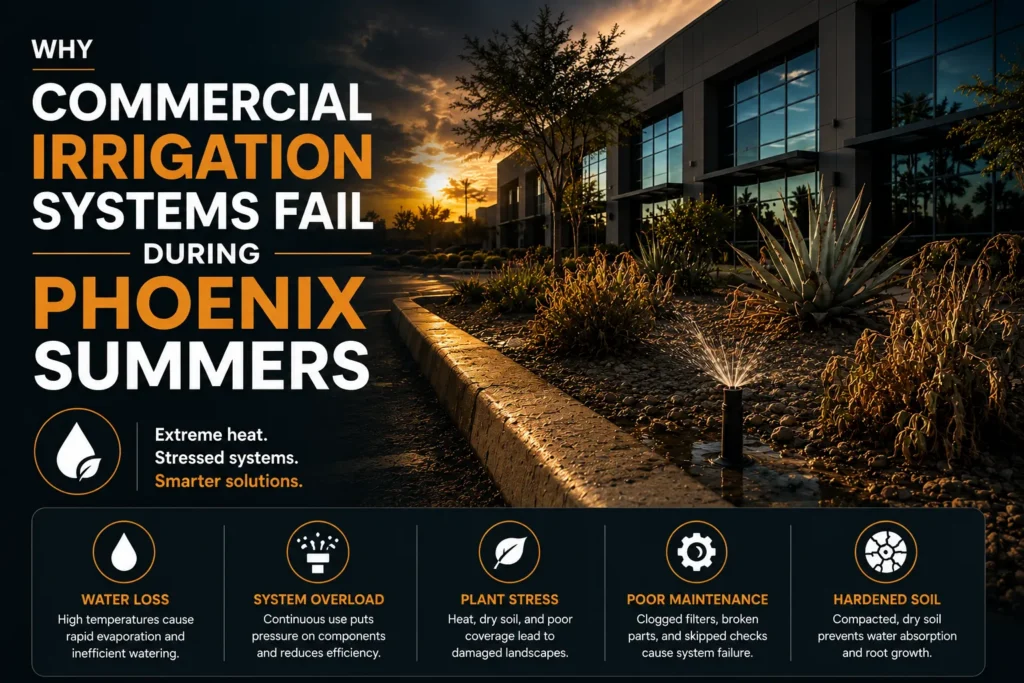
Commercial irrigation systems work harder during a Phoenix summer than at any other time of year.
As temperatures rise, turf, shrubs, trees, palms, and landscape beds depend more heavily on steady water delivery. Irrigation schedules become longer, valves operate more often, sprinkler heads run under greater demand, and small system weaknesses begin to show, making summer problems easier to spot.
A sprinkler head that was only slightly clogged in spring may leave a large dry patch. A slow underground leak can increase water bills while nearby plants still struggle. A valve that opens inconsistently can leave an entire landscape zone under watered during the hottest part of the year.
For property managers, these problems can become expensive quickly.
Once turf begins to die or mature plants decline, the property may require more than a simple irrigation system repair. It may also need plant replacement, turf restoration, tree care, soil work, and additional water use to recover the damaged area.
This guide explains why commercial irrigation systems fail during Phoenix summers, the warning signs property managers should watch for, and how early irrigation maintenance can protect a commercial landscape investment.
Why Summer Exposes Irrigation Problems
Many irrigation problems begin before summer but remain hidden while temperatures are mild.
During cooler months, plants lose less moisture and may survive even when water coverage is imperfect. Turf can remain green despite minor sprinkler issues, and a weak drip line may still provide enough water to keep shrubs alive, so these problems can go unnoticed.
Phoenix summer changes that balance.
Extreme heat increases plant water demand and reduces the amount of time a landscape can tolerate uneven irrigation. Small problems become visible faster because the system has less room for error.
Commercial properties are especially vulnerable because they often have multiple irrigation zones, long underground lines, aging valves, mixed plant material, large turf areas, and many sprinkler or drip components spread across the site.
The more complex the system, the more opportunities there are for one problem to affect an entire landscape section.
Dry Spots Often Point to Coverage Problems
Dry spots are one of the most common signs that a commercial irrigation system is not performing correctly.
They may appear as brown turf, thinning grass, wilting shrubs, brittle ground cover, or plants that look weaker than others nearby.
A dry spot does not always mean the entire property needs more water.
It may be caused by a broken sprinkler head, a clogged nozzle, a damaged drip line, low pressure, a blocked spray pattern, an incorrect controller setting, or a valve that is not opening fully.
This distinction matters.
Increasing irrigation time across the entire property can waste water without fixing the dry area. It may even create overwatering in healthy zones while the damaged section continues to decline, so the problem can spread in another way.
Property managers should look for patterns. A round or sharply defined dry patch often suggests a sprinkler coverage issue. Several stressed plants in the same bed may point to a drip line or valve problem. A large dry zone may indicate controller, pressure, or valve failure.
Broken Sprinkler Heads Cause More Than Water Waste
Broken sprinkler heads are common on commercial properties.
They may be damaged by mowing equipment, vehicles, foot traffic, soil movement, vandalism, or normal wear.
A broken head may spray water straight into the air, flood one small area, fail to rise, spray in the wrong direction, or stop working entirely.
This affects more than the immediate location. When one head is broken, the pressure available to the rest of the zone may drop, so nearby sprinkler heads may no longer reach their intended areas, creating several dry spots from one damaged component.
When one head is broken, the pressure available to the rest of the zone may drop. Nearby sprinkler heads may no longer reach their intended areas, creating several dry spots due to a single damaged component.
Broken heads can also spray sidewalks, buildings, parking spaces, and drive lanes. This creates water waste, slippery surfaces, staining, and poor property appearance.
Even a few missed watering cycles can cause visible turf stress around a failed sprinkler head.
Valve Problems Can Damage Entire Landscape Zones
Irrigation valves control the flow of water into different landscape zones.
When a valve fails, the impact may be far greater than that of a single broken sprinkler.
A valve may remain closed, open only partially, leak continuously, or fail to shut off after a scheduled cycle. Each of these problems causes different kinds of damage across the zone.
A valve that does not open may leave an entire zone dry. A valve that opens only partway may reduce pressure and create uneven coverage. A valve that does not close can cause standing water, erosion, root damage, and high utility bills.
Valve problems can be difficult to spot because the valve box may be located far from the visible damage.
Property managers often notice landscape symptoms first, such as widespread dryness, unusually wet soil, or a zone running outside its scheduled time.
When several plants or turf sections decline together, inspect the valve before the landscape receives more water.
Pressure Problems Create Uneven Watering
Commercial irrigation systems need proper water pressure to distribute water evenly.
When pressure is too low, sprinkler heads may not rise fully or spray far enough. Drip zones may provide weak flow, leaving plants at the end of the line under watered.
When the pressure is too high, water may mist rather than reach the soil. Sprinkler heads and fittings may wear out faster, leaks may develop, and water can drift onto pavement.
Pressure problems may be caused by leaking lines, damaged valves, improper system design, partially closed controls, worn regulators, or too many irrigation components operating within a single zone.
During extreme heat, uneven pressure becomes more damaging because plants in low coverage areas have less time to recover.
A commercial irrigation repair company should check whether the problem is isolated to one component or affecting the broader system.
Leaks Become Expensive Fast
Not every irrigation leak is easy to see.
Some leaks create obvious puddles or flowing water. Others happen underground, beneath decorative rock, inside valve boxes, or along buried drip lines.
Hidden leaks can continue for days or weeks while increasing water use and reducing pressure elsewhere in the system.
This creates a costly situation. The property may be paying for more water even as the landscape still develops dry spots, making the loss easier to notice and harder to ignore.
The property may be paying for more water while the landscape still develops dry spots.
Common signs of a hidden irrigation leak include unusually soft soil, persistently damp soil, water running along curbs, unexplained plant decline, low pressure, or a sudden increase in the water bill.
In Phoenix, leak detection becomes especially important during summer because seasonal water use is already high. A leak can blend into the expected increase and go unnoticed unless the property manager carefully compares usage.
Controllers Often Use the Wrong Summer Schedule
The irrigation controller manages when each zone runs and for how long.
A controller may be working properly but still be programmed incorrectly for summer conditions.
Common problems include outdated schedules, skipped zones, incorrect start times, repeated cycles, power interruptions, dead backup batteries, or seasonal adjustments that were never completed.
A spring schedule may not provide enough water. However, simply adding more minutes to every zone may not solve the problem because different landscape areas have different needs.
Different landscape areas have different needs.
Turf, desert shrubs, trees, seasonal color, and drip-irrigated beds should not all be managed the same way. Soil conditions, sun exposure, plant maturity, and irrigation type also affect watering needs.
The controller should support the landscape design rather than apply a single schedule across the entire property.
Drip Irrigation Problems Are Easy to Miss
Many Phoenix commercial landscapes use drip irrigation for shrubs, trees, palms, and desert plants.
Drip systems are efficient when they are working correctly, but their problems can be difficult to see.
Emitters may clog, lines may split, tubing may move away from the plant, or decorative rock may cover the area where water should be delivered.
Because drip irrigation operates slowly, a damaged line may not create an obvious spray or puddle. The first sign may be a declining shrub or tree, making the problem easy to miss.
The first sign may be a declining shrub or tree.
Property managers should pay attention when one plant looks stressed while nearby plants remain healthy. The problem may be a single missing or clogged emitter rather than general summer heat.
Drip lines should also be checked after landscape work because trimming, planting, raking, and rock movement can damage or displace tubing.
Tree Irrigation Problems Can Become Long-Term Issues
Trees need deeper watering than smaller plants.
A system that keeps surface soil damp may still fail to deliver enough water to the deeper root zone.
During Phoenix summers, poor tree irrigation can lead to leaf scorch, canopy thinning, early leaf drop, dead branches, and long-term decline.
Mature trees are expensive to replace and may create safety concerns when they weaken.
Tree irrigation should be reviewed separately from nearby shrubs or turf. A tree located in a lawn area may not receive the deep watering it needs, even if the grass looks healthy, so the two should not be judged the same way.
Property managers should also watch for irrigation changes caused by root growth, soil compaction, nearby construction, or landscape renovations.
Early correction is much less expensive than removing and replacing a mature tree. For Phoenix property managers, prompt irrigation repair helps protect landscape health and avoid higher costs later.
Standing Water Is Not a Sign of Good Irrigation
Some property managers assume wet soil means the system is working.
Standing water usually means something is wrong.
It may point to a broken line, a leaking valve, excessive run time, poor drainage, low soil absorption, or a sprinkler head flooding a single location.
Standing water can damage plant roots, create disease conditions, move decorative rock, erode decomposed granite, and create slippery areas near walkways.
It may also attract pests or leave mineral staining on pavement.
In apartment communities, HOAs, offices, and retail centers, standing water near entrances or common areas can quickly become a safety and appearance concern.
Rising Water Bills Should Trigger an Inspection
Commercial water bills naturally increase during Phoenix summers, but unexplained jumps should not be ignored.
A sharp increase may indicate an irrigation leak, a controller problem, a valve that is not shutting off, a broken line, or an excessive watering schedule.
Property managers should compare current use with the same period from the previous year whenever possible.
They should also consider whether the landscape size, watering schedule, or property use has changed.
If water use increases significantly without a clear reason, the irrigation system should be inspected before the next billing cycle.
The cost of an early inspection is usually much lower than the cost of months of wasted water and landscape damage.
Why Irrigation Failures Become So Expensive
Landscape demand is high, soil dries quickly, and plants have little tolerance for missed watering.
A small issue can lead to several layers of cost.
The property may pay for the irrigation repair first. It may then need to replace dead shrubs or repair damaged turf. If a tree declines, the cost may include specialized care, trimming, or removal.
There may also be higher water bills, emergency labor, resident complaints, and damage to high-visibility areas.
This is why irrigation problems should be treated as early maintenance issues rather than delayed improvement projects.
How Early Inspections Protect Landscape Investments
A commercial irrigation inspection can identify problems before the landscape shows severe damage.
The inspection should review sprinkler heads, valves, controller settings, drip lines, pressure, leaks, spray patterns, dry zones, standing water, and water use concerns.
The goal is not only to find broken parts.
It is to confirm that water is reaching the right areas in the right amount.
Early inspections protect turf, shrubs, trees, palms, seasonal color, and other landscape investments. They also help property managers plan repairs rather than react to sudden failures.
For large properties, it may make sense to inspect the system before peak summer and continue regular irrigation maintenance during the hottest months.
What Property Managers Should Monitor
Property managers do not need to become irrigation technicians, but they should recognize warning signs.
During routine property walks, look for brown turf, wilting plants, uneven landscape color, broken sprinkler heads, water spraying onto pavement, wet areas that never dry, exposed drip lines, erosion, low pressure, and zones running at unusual times.
Water bills should also be reviewed regularly.
When the same issue recurs, the property may need more than a quick repair. It may need a full irrigation evaluation to find the underlying cause.
When to Schedule Commercial Irrigation Repair in Phoenix
Commercial irrigation repair should be scheduled when the system shows repeated dry spots, active leaks, broken heads, valve issues, low pressure, controller problems, standing water, or unexplained water use.
Property managers should not wait until the turf turns brown or plants begin to die.
Urgent repair is especially important when the problem affects mature trees, major common areas, community entrances, leasing areas, walkways, or large turf zones.
A quick response protects both the landscape and the property budget.
Final Thoughts
Commercial irrigation systems often fail during Phoenix summers because heat exposes weaknesses that were already developing.
Broken sprinkler heads, leaking lines, valve problems, pressure issues, clogged emitters, outdated controller settings, and uneven coverage all become more damaging when temperatures rise.
For property managers, early irrigation maintenance is one of the best ways to protect turf, plants, trees, water use, and long-term landscape investments.
A small repair completed early may prevent thousands of dollars in replacement work later.
The sooner a problem is identified, the easier it is to protect the landscape before summer damage takes over.
Frequently Asked Questions
Summer heat increases watering demand and exposes problems with sprinkler heads, valves, pressure, drip lines, leaks, and controller settings.
Common signs include dry spots, standing water, broken sprinkler heads, low pressure, uneven coverage, plant stress, and rising water bills.
Leaks waste water, reduce pressure, damage nearby landscape areas, and may remain hidden during a season when water use is already high.
Commercial systems should be inspected before peak summer and monitored regularly during hot weather, especially on large or older properties.
Yes. Poor or shallow irrigation can weaken mature trees, cause canopy decline, and lead to expensive tree care or replacement.