
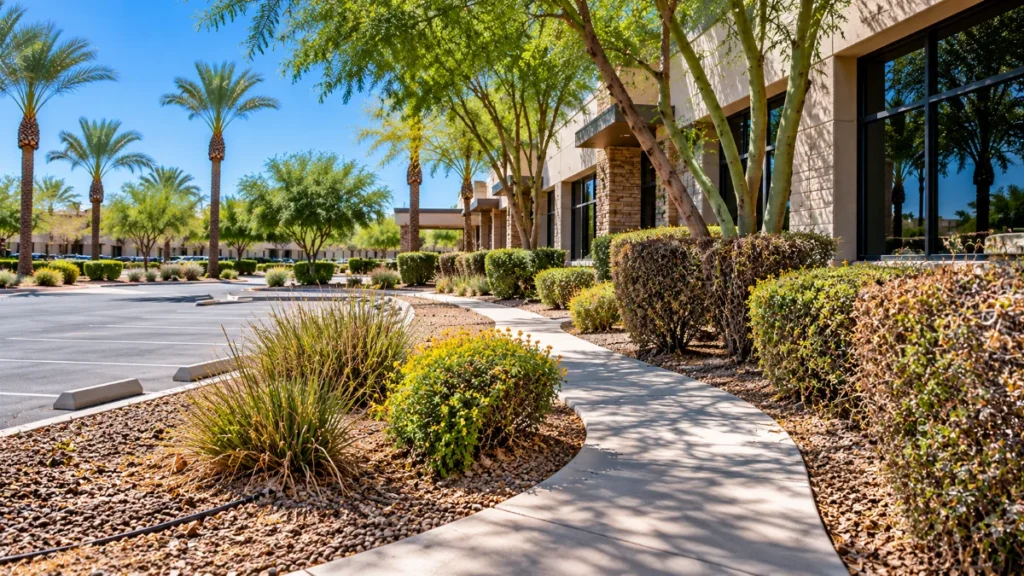
A commercial property can receive regular landscape service and still look tired.
The crew may arrive every week. Weeds may be controlled. Shrubs may be trimmed. Debris may be removed. Yet the property still feels dated, thin, overgrown, or unfinished.
When that happens, the problem is not always maintenance quality.
Landscapes age.
Plants mature beyond the spaces where they were installed. Decorative rock thins and fades. People patch irrigation systems for years without redesigning them. Beds lose their original structure. Materials are replaced in small sections that no longer match. Entrances that looked strong fifteen years ago may no longer reflect the condition or positioning of the property today.
For property managers, recognizing the difference between a maintenance problem and an aging landscape problem is important. Otherwise, the property may keep asking the maintenance crew to solve conditions that require actual landscape improvements.
This guide explains why some commercial landscapes look tired even when they are regularly maintained and how to decide whether the solution is better maintenance, targeted upgrades, or a larger renovation plan.
Maintenance Preserves a Landscape. It Does Not Freeze It in Time
Routine commercial landscape maintenance manages growth, cleanliness, weeds, turf, irrigation issues, and overall presentation.
It can keep a healthy landscape performing well.
It cannot make old plant material young again. It cannot restore missing decorative rock through pruning. It cannot fix poor original plant spacing, redesign an outdated irrigation zone, or turn an overgrown monument bed into a modern entrance without changing something.
This is the key distinction.
When the physical landscape has aged beyond what routine service can reasonably maintain, the property needs an improvement plan, not just more visits.
Thinning Decorative Rock Makes Beds Look Unfinished
Decorative rock covers large portions of many Phoenix commercial landscapes.
Over time, it moves, settles into the soil, gets displaced by foot traffic, washes toward curbs, and gets disturbed during irrigation repairs and landscape work.
You may still weed and blow the bed clean every week, but bare soil begins to show through, and color becomes inconsistent.
This makes the entire property feel older.
Routine maintenance can redistribute some material, but it cannot create rock that isn’t there.
A targeted rock refresh may improve the look more than increasing maintenance frequency.
Mature Plants Can Outgrow Their Original Design
Many commercial landscapes are planted densely so they look full soon after installation.
Years later, those same plants compete for space.
Shrubs grow into walkways, cover windows, block monument signs, hide lighting, and merge into each other. Maintenance crews respond by trimming harder and more often.
Eventually, the beds begin to look like a collection of repeatedly cut shapes rather than a designed landscape.
This is not always a pruning failure.
The plant may simply be too large for the space.
Selective removal and replacement with appropriately sized material can reduce maintenance and restore the bed’s structure.
Repeated Shearing Can Make Old Shrubs Look Worse
People often keep aging shrubs smaller through constant shearing.
Over time, the exterior may stay green while the interior becomes woody and bare. The plant loses its natural form, and each trimming cycle exposes more of the older structure.
At that point, asking the crew to “trim it better” may not solve the problem.
The property should determine whether the shrub can be rejuvenated appropriately or whether replacement is more practical.
Entrance beds and high visibility areas are especially sensitive because old, woody plants can make a well-maintained property look neglected.
Old Irrigation Design Can Hold the Landscape Back
Commercial landscapes change over time, but irrigation zones often remain exactly as they were installed.
Small trees become mature trees. Beds are replanted. Turf areas are reduced. New shrubs are added. Drip emitters remain near the original planting location. Valves are repaired individually, and controller schedules become increasingly complicated.
The system may technically work while no longer matching the landscape.
This can create wet and dry areas, repeated plant stress, high water use, and a maintenance team that constantly reacts to symptoms.
When irrigation problems recur across the same zones, the property may need design correction rather than another small adjustment.
Tired Beds Often Need Editing, Not More Plants
One of the easiest mistakes is adding new plants every time a bed feels empty.
That can make an aging landscape even more cluttered.
Some beds need subtraction first.
Remove dead material, plants that no longer fit, conflicting species, old stumps, unnecessary volunteer growth, and items that block visibility. Then evaluate the structure that remains.
A cleaner bed with fewer healthy plants can look more intentional than a crowded bed with many different ages, sizes, and shapes.
Only after simplifying the bed should, you add new plant material where it has a clear purpose.
Mismatched Materials Reveal Years of Piecemeal Repairs
Commercial properties often accumulate small repairs over time.
One section receives a different rock color. A damaged border is replaced with another material. New plants are added that do not match the original design. Different irrigation components remain visible. Mulch, rock, concrete, and decomposed granite meet awkwardly at edges.
Each change may have been reasonable when it happened.
Together, they make the property feel inconsistent.
A landscape improvement plan can standardize materials in the most important areas without requiring a full renovation.
Entrances Age Faster Visually Than the Rest of the Property
An entrance can be maintained correctly and still feel dated.
The monument may be surrounded by oversized shrubs. Decorative rock may be faded. The original plant palette may be too dense for today’s visibility needs. Lighting may be blocked. Irrigation tubing may be exposed after years of repairs.
Because entrances shape first impressions, these aging signs carry more weight than similar conditions in a remote bed.
For many commercial properties, a targeted entrance improvement is the most efficient way to make the entire site feel better maintained.
Missing Plants Create Visual Holes
When plants die over many years, replacements are not always installed immediately.
One missing shrub does not matter much. Several missing plants across a long frontage or monument bed change the balance of the design.
The remaining plants may then be pruned or stretched visually to fill space they were never meant to fill.
A property-wide plant review can identify where missing material should be replaced and where the better answer is to redesign the bed with fewer plants.
Old Turf Can Look Weak Even With Regular Mowing
Mowing keeps grass at the right height, but it doesn’t fix every turf problem.
Compaction, poor irrigation coverage, heavy foot traffic, soil problems, shade changes, repeated heat stress, and aging irrigation can leave turf thin or uneven.
If the same areas repeatedly decline, the property should investigate the underlying cause before blaming mowing quality.
Some lawn areas may need soil work, irrigation correction, recovery, or conversion to another landscape type if the location no longer supports healthy turf.
Overgrown Trees Can Change the Original Landscape Balance
Mature trees are valuable, but they change the conditions underneath them.
A bed that originally received full sun may become deeply shaded. Turf can thin. Shrubs selected for sun may decline. Tree roots compete for water and space.
The tree is not necessarily the problem.
The surrounding landscape may simply need to evolve.
Replacing sun-loving plants with material suited to shade, adjusting irrigation, and changing ground treatment can preserve the mature tree while improving the area around it.
Maintenance Problems and Aging Landscape Problems Look Different
Maintenance Problem or Aging Landscape Problem?
Use the pattern behind the issue to decide whether the answer belongs in routine maintenance or a landscape improvement plan.
| What you see | Likely maintenance issue | Likely aging or improvement issue |
| Visible weeds | Weeds remain after normal service or return because treatment is inconsistent | Chronic weed pressure may also be worsened by thin rock or disturbed beds |
| Overgrown shrubs | Routine pruning is being missed | Plant has outgrown the space and needs replacement or redesign |
| Dry plants | Irrigation problem was missed or not reported | Old zone design no longer matches mature plants or changed landscape |
| Bare landscape beds | Cleanup or plant care may be incomplete | Rock has thinned, plants have died over years, bed needs renovation |
| Uneven entrance appearance | Detail work may be inconsistent | Materials, plants, and monument landscape are dated or mismatched |
| Thin turf | Mowing or irrigation issues may be contributing | Compaction, shade, soil, traffic, or unsuitable turf location may require improvement |
The Same Complaint Repeating Is a Clue
A recurring problem often reveals that maintenance is being asked to solve something structural.
If the same shrubs are trimmed away from a sign every month, the plants may be wrong for the location. If the same rock area washes out after every storm, drainage or grading may need correction. If the same plants die each summer, review irrigation, heat exposure, or plant selection.
Property managers should pay close attention to issues that return immediately after being “fixed.”
Repetition often indicates the wrong type of solution.
More Maintenance Is Not Always Better
Increasing visit frequency can improve cleanliness and control fast growth, but it cannot solve every visual problem.
In fact, trimming plants that are already too large more often can make beds look more artificial and increase stress on the material.
The property should identify whether additional labor will improve the condition or simply maintain an old problem more aggressively.
This distinction protects the maintenance budget.
High Visibility Areas Should Be Diagnosed First
If the entire property cannot be improved at once, start with the places that shape first impressions.
Review entrances, monument signs, leasing offices, retail frontage, medical building approaches, clubhouse areas, pools, and major common spaces separately.
A few targeted upgrades in these areas can make the property feel significantly newer while broader improvements are planned over time.
This also gives ownership or an HOA board visible evidence that landscape improvement spending is producing a result.
Irrigation Should Be Evaluated Before Plant Replacement
A tired bed often tempts managers to approve new plants immediately.
Before installing them, check water delivery.
If the existing plants failed because of poor drip placement, low pressure, a leaking line, mismatched zones, or an outdated schedule, new plants will inherit the same problem.
Irrigation is the infrastructure behind the landscape.
A targeted improvement project should correct that infrastructure first when needed.
Use Landscape Improvements to Simplify Future Maintenance
Good upgrades should make the property easier to maintain, not just better looking on installation day.
Replace shrubs that require constant trimming with plants that fit the available space. Correct irrigation zones so plants with different water needs are separated. Reduce narrow turf areas that are difficult to mow and irrigate. Improve bed edges so rock stays out of walkways. Preserve mature trees while adapting surrounding plant material to new shade conditions.
These decisions reduce recurring problems after the project is complete.
Not Every Old Landscape Needs a Full Renovation
Many commercial properties can improve dramatically through selective work.
A rock refresh, entrance update, plant replacement program, irrigation correction, selective turf conversion, and cleanup of several tired beds may be enough.
The property doesn’t need to demolish every mature landscape feature just because parts of it are aging.
The best plan protects what still works and upgrades what no longer does.
Know When a Larger Renovation Makes More Sense
A larger renovation may be justified when problems are widespread rather than isolated.
If irrigation design is failing across many zones, plant material is broadly inappropriate, ground materials are inconsistent throughout the site, entrances and common areas all feel dated, and years of repairs have created a patchwork landscape, continued small fixes may become more expensive than a coordinated plan.
The property manager should compare the cost of ongoing piecemeal work with the value of resetting the design in phases.
A renovation can still be staged rather than completed at once.
Ask the Landscaping Company for Two Types of Recommendations
Property managers should ask the vendor to separate recommendations into maintenance corrections and improvement opportunities.
Maintenance corrections are things the existing service should address, such as missed weeds, incomplete pruning, debris, or reporting failures.
Improvement opportunities require additional work, materials, redesign, or capital spending.
This separation prevents confusion and clarifies budgeting.
It also helps determine whether dissatisfaction is really about the vendor or about the landscape’s age.
Final Thoughts
A commercial landscape can be regularly maintained and still look tired because maintenance and landscape age are two different issues.
Routine service controls growth, weeds, debris, and day-to-day appearance. It does not automatically replace thinning rock, redesign old irrigation, restore missing plants, correct overcrowded beds, modernize entrances, or change materials that no longer work together.
Property managers should look for patterns.
If a problem disappears after good routine service, it was probably a maintenance issue. If the same problem returns despite consistent service, the landscape itself may need improvement.
The best properties use both approaches.
They maintain what is healthy and functioning, then upgrade parts routine maintenance can no longer handle.
Frequently Asked Questions
Routine maintenance cannot reverse thinning decorative rock, mature plants that have outgrown their spaces, outdated irrigation design, missing plant material, or dated entrances.
If normal service should reasonably correct the issue, it is probably maintenance. If the same condition returns despite consistent service, the landscape may need an improvement.
Not always. Targeted entrance upgrades, irrigation corrections, rock refreshes, selective plant replacement, and bed improvements can produce significant results.
Shrubs that have outgrown their spaces may develop woody interiors and lose natural form after years of shearing. Replacement or redesign may be more practical than more aggressive pruning.
Yes. If plant decline is connected to poor coverage, mismatched zones, or damaged irrigation, new plants may fail for the same reason.
High-visibility entrance work, rock refreshes, removing declining plants, selective replacement, clearer bed edges, and fixing obvious irrigation problems often deliver strong results.